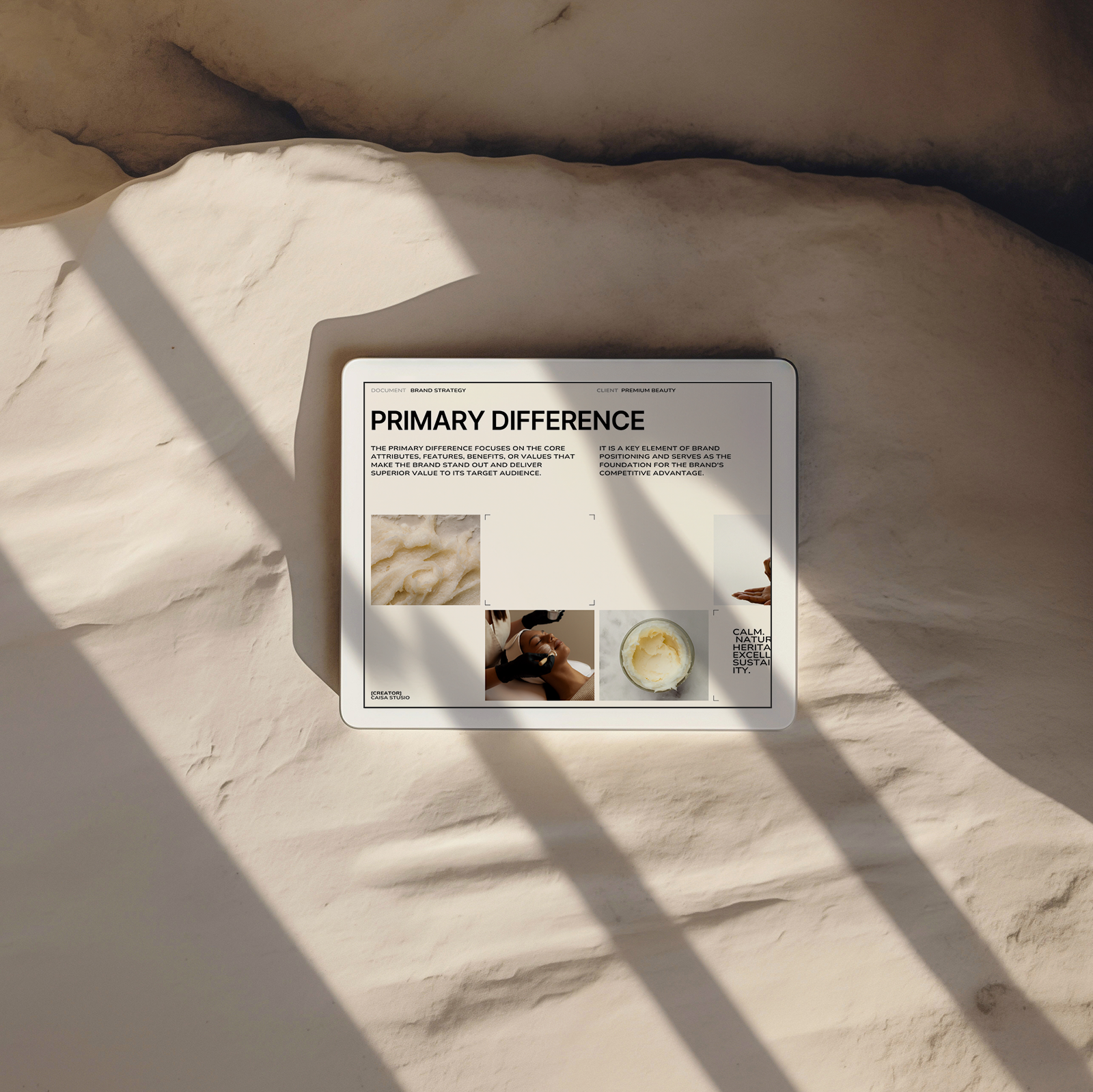
Transforming a fragmented growth model into a connected, premium commerce system.
Client: Luxury Spa and Wellness Brand, based in Bath.
The Context.
This was a founder-led bath and wellness brand operating across multiple channels, including direct-to-consumer, retail and spa partnerships.
The business had strong foundations. The product was well regarded, there was existing demand, and distribution was already established across several routes to market. From the outside, it looked like a brand with momentum.
Underneath, things were less clear.
Each channel was functioning, but largely in isolation. Direct-to-consumer, retail and partnerships were all contributing to revenue, but without a shared structure connecting them. Marketing activity was active but not always aligned, and the brand itself lacked the level of clarity needed to support a more premium position.
As a result, growth was happening, but it wasn’t compounding.
The Challenge.
The core issue was not performance, but cohesion.
The business was effectively operating as a set of parallel efforts rather than a connected system. Channels were being managed individually, without a clear understanding of how they should work together to drive acquisition, conversion and retention.
At the same time, the brand’s positioning was not as defined as it needed to be to compete confidently within a premium category. Messaging lacked sharpness, and the overall presentation did not fully reflect the quality of the product or the experience behind it.
This created a gap between what the brand was and how it was perceived, which in turn limited both conversion and long-term value.
The Approach.
The focus was on bringing clarity at both a brand and system level.
Rather than starting with tactical changes, the work stepped back to look at how the business actually grows in practice. This meant understanding how customers discover the brand, how they move between channels, and where value is either created or lost.
From there, the aim was to define a more intentional structure. One that connects brand, marketing and commerce into a system that supports both immediate performance and longer-term growth.
What Changed.
[The brand was repositioned for a more premium space]
The first step was refining how the brand shows up.
Positioning and messaging were clarified to better reflect the quality of the product and the intended market. This created a stronger foundation for both marketing and conversion, allowing the brand to operate more confidently within a premium segment.
[Channels were redefined as part of a single system]
Rather than treating DTC, retail and partnerships as separate workstreams, each channel was given a clearer role within the overall growth model.
Direct-to-consumer became the primary space for brand expression and conversion. Retail and spa partnerships were repositioned as both distribution and discovery channels, with a more active role in driving awareness and sell-through.
This created alignment where previously there had been fragmentation.
[The customer journey was structured end-to-end]
The path from discovery to purchase was mapped more intentionally.
Marketing activity, on-site experience and post-purchase engagement were connected into a clearer flow, reducing friction and improving consistency across touchpoints. This made it easier for customers to understand the brand and move towards purchase with confidence.
[Retention became a defined part of the growth model]
Lifecycle and CRM strategy were introduced to strengthen retention.
Rather than focusing primarily on acquisition, the model began to place more emphasis on repeat purchase and customer value over time. This helped shift the business towards a more sustainable and predictable form of growth.
[Content and campaigns were aligned to commercial priorities]
Content was repositioned as a more strategic driver of growth.
Instead of being produced reactively, it was structured around clear objectives, supporting both brand building and conversion. Campaigns became more focused, with a stronger connection between messaging, product and commercial outcomes.
What This Enabled.
These changes brought a greater sense of coherence to the business.
Channels began to work together rather than compete, and the relationship between brand, marketing and commerce became clearer. The brand itself felt more elevated and more consistent, which supported both perception and conversion.
Over time, this created a shift from reactive activity to a more structured growth model, where decisions could be made with greater clarity and confidence.
Strategic Contribution.
This work focused on helping a founder-led brand move from fragmented growth to a more intentional system.
By aligning positioning with commercial strategy and connecting channels into a cohesive model, the project demonstrates how brands can unlock more value from what already exists, rather than simply adding more activity.
It reflects a broader approach to growth, where clarity, structure and consistency create the conditions for scale.
Scope.
Brand positioning and messaging refinement
Multi-channel growth strategy (DTC, retail, partnerships)
Customer journey and conversion optimisation
Lifecycle and CRM strategy
Partner activation frameworks
Content and campaign alignment
Interested in working together?
If you’re exploring how to bring more clarity and momentum to your growth strategy, you’re welcome to get in touch. I work with founders and teams to step back from day-to-day activity and reconnect brand, marketing and commerce into a more cohesive growth system. If you’re navigating a period of change, looking to unlock the next stage of growth, or simply want an experienced perspective on where to focus next, a short conversation is a good place to start.