The stay is just the beginning.
Why the most interesting boutique hotels are building commerce ecosystems that extend the experience beyond checkout — and what that means for how they grow.
A guest checks out of a boutique hotel on a Portuguese coastline on a Sunday morning.
They have spent four nights there. They have eaten breakfast on the same terrace every morning watching the light change over the water. They have slept in linen that felt unlike any linen they own. They have drunk wine from a producer thirty kilometres away that they have never encountered anywhere else. They have had a conversation with the owner that made them feel genuinely seen.
They leave with something. Not just a memory. A feeling. A specific quality of experience that they will carry for months and describe to people in detail that surprises even themselves.
And then the hotel sends them a review request. And a discount code for their next stay. And a monthly newsletter they never asked for.
The relationship that could have become one of the most commercially valuable assets the hotel possesses is reduced to a drip campaign.
This is one of the most significant missed opportunities in boutique hospitality. And the brands that are getting it right are building something fundamentally different in its place.
Rethinking what a hotel actually is
The conventional model of a boutique hotel is a physical space that generates revenue through room nights. Everything else — the food, the spa, the shop, the experiences — are secondary lines that support the primary transaction.
That model made sense when the physical stay was the only meaningful touchpoint between the brand and the guest. But the relationship a boutique hotel can build with a genuinely delighted guest extends far beyond the room. And the most interesting properties in the world are beginning to understand this.
The stay is not the product. The stay is the entry point to a relationship. And that relationship, if it is designed with the same intention as the physical experience, has commercial value that compounds across years rather than resetting at every checkout.
What the experience actually creates
When a guest leaves a boutique hotel genuinely moved by what they experienced, they carry several things with them that most hotels never think to build on.
They carry a sensory memory. The smell of the linen. The taste of the olive oil at dinner. The particular quality of light in the courtyard at six in the evening. These memories are vivid and lasting in a way that most consumer experiences never achieve.
They carry a genuine desire to maintain the connection. Not in an abstract loyalty programme sense. A real desire to feel that feeling again. To access the world of the brand in whatever way is available to them.
And they carry social capital. The knowledge of a place that feels special is something people want to share. The recommendation is partly generous and partly an expression of taste… I know about this place and now you do too.
These are not sentimental observations. They are the foundations of a commerce ecosystem. One where the brand generates revenue, deepens loyalty and acquires new guests not through paid marketing, but through the compounding value of genuine emotional connection.
What building beyond the stay looks like
The hospitality brands doing this most interestingly are not adding revenue streams in the conventional sense. They are thinking about something more ambitious — how to let guests continue experiencing the world of the brand long after they have left it.
Some of the most compelling examples of this thinking are still rare enough to feel genuinely distinctive.
The seasonal edit
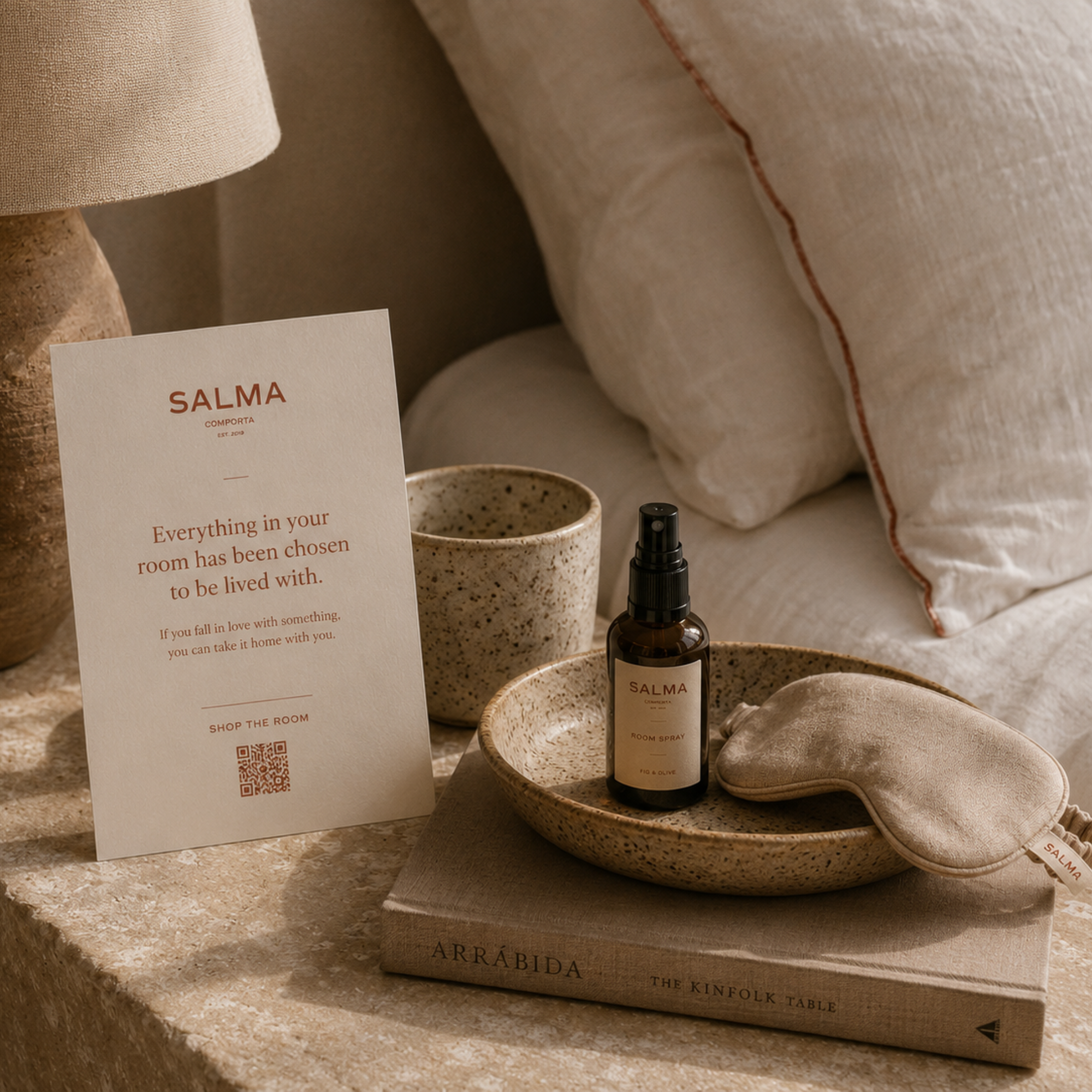
Rather than a generic hotel shop, a curated quarterly box sent to past guests. Not branded merchandise. A specific edit of objects, ingredients, scents and stories connected to what is happening at the property that season. The wine being poured at dinner right now. The herb the kitchen has been obsessing over. A small ceramic from the maker whose work is in the rooms. A card from the owner explaining the thinking behind each selection. It arrives and the guest is transported back immediately. They did not buy products. They bought a continuation of an experience they are not ready to let go of.
The living recipe archive
For properties where food is central to the experience, and it almost always is in the boutique hotels worth talking about, a private recipe archive for past guests. Not a cookbook. A living document that grows with the seasons. The chef’s notes on what they are cooking right now and why. Techniques specific to the place. Ingredients only available locally with suggestions for the closest equivalent elsewhere. Something that makes the guest feel like an insider with access to the kitchen long after they have left it.
The place soundtrack
The atmosphere of a great hospitality experience is partly sonic. The music in the bar, the ambient sounds of the location, the specific quality of an evening on a terrace. Some properties have begun releasing seasonal playlists, not as a marketing tool but as a genuine extension of the atmosphere. A guest who puts on the playlist at home is not consuming content. They are accessing a feeling. And every time they do the property is present in their life.
Early access and the insider layer
For the guests who have clearly fallen in love with the property — the ones who have returned more than once, who engage with the brand, who recommend enthusiastically — a private insider layer that makes that relationship feel acknowledged and valued. First access to new rooms or experiences before they are publicly available. The opportunity to visit in a way that feels different to a standard booking — perhaps during a period usually closed to guests, or with access to something not on the standard offer. Not a loyalty programme with points and tiers. A genuine acknowledgment that some guests have a different relationship with the place and that relationship deserves to be honoured.
The commission-free creative residency
For properties with a strong aesthetic identity and a connection to the creative world, and many of the boutique hotels worth talking about have exactly this, a residency model that brings artists, writers, photographers or chefs into the property for a period in exchange for work that becomes part of the brand. The resulting photographs become the content. The writing becomes the editorial. The ceramic work becomes the shop. The residency creates genuine creative output while simultaneously building the kind of cultural credibility that no campaign can manufacture. Past guests who know the property follow the residency with genuine interest. New audiences discover the property through the creative’s audience.
Each of these is a touchpoint in a commerce ecosystem that extends the relationship beyond checkout. Each one generates revenue. Each one deepens loyalty. Each one makes the next stay more likely and the recommendation more enthusiastic.
The structural shift this requires
Building a commerce ecosystem that extends beyond the stay requires a different way of thinking about what a boutique hotel actually is.
It requires the property to think of itself as a lifestyle brand with a hotel at its centre rather than a hotel that occasionally sells products. The distinction matters because lifestyle brands are built around ongoing relationships. They create reasons to stay connected between transactions. They generate revenue across the year rather than only during the season.
It requires a direct relationship with guests that does not depend on third-party platforms. An owned email list. A communication strategy that feels personal rather than automated. The infrastructure to maintain the relationship after checkout in a way that feels like a continuation of the experience rather than a marketing exercise.
And it requires the brand clarity to know what extensions feel authentic and what feel forced. Not every product, experience or communication will feel right for every property. The test is always the same. Does this feel like it belongs in the world we have built? Would a guest who loved their stay feel delighted to receive this or vaguely sold to?
The answer to that question — asked honestly — is the difference between a commerce ecosystem that deepens trust and one that erodes it.
The commercial case
The commercial argument for building beyond the stay is compelling and significantly underappreciated.
A boutique hotel that generates revenue only through room nights is entirely dependent on occupancy. Every quiet period, every shoulder season, every external disruption directly impacts the bottom line. The brand has no commercial resilience beyond the core transaction.
A boutique hotel with a developed commerce ecosystem generates revenue across the year. Products sold to past guests in January. Events attended by returning community members in October. Wine orders placed by guests who visited in the summer and have been thinking about it ever since.
More importantly, the guests who engage with the brand beyond the stay are the most commercially valuable guests the property has. They return more often. They spend more when they are there. They recommend more enthusiastically. They are more forgiving when things are imperfect because the relationship has depth beyond a single transaction.
Most boutique hotels do not know who these guests are. They have not built the systems to identify them, communicate with them or give them reasons to stay connected. The opportunity that walks out the door every checkout is genuinely significant.
Where to begin
The most common question I hear from hospitality founders when they encounter this thinking is some version of… where do I even start?
The answer is almost always the same. Start with the guest you already have.
Not with a new product strategy or a commerce platform or a brand extension campaign. With a genuine understanding of the guests who loved their stay and a question about what they would want to take home with them. What sensory memory would they want to keep alive. What piece of the world you have built would feel like a natural extension of the experience they had.
That question, asked honestly and specifically, usually reveals the first and most obvious opportunity. And from there the ecosystem builds gradually, one genuine extension at a time.
The stay is the beginning. Everything that follows is designed to keep the relationship alive.